In performance marketing, how you pay matters as much as what you promote. Pricing models determine risk, scalability, profitability, and overall campaign success. The most commonly used media buying models today are CPA (Cost Per Action), CPL (Cost Per Lead), and CPS (Cost Per Sale). Understanding the differences between these structures helps marketers align their campaigns with clear goals, whether that involves driving app installs, generating high-quality leads, or securing direct sales. These models directly affect ROI, scaling potential, and campaign timelines, making them critical decisions for long-term success.
What Is CPA (Cost Per Action)?
CPA is a performance marketing model where advertisers pay only when a specific action is completed by the user. The action does not necessarily involve a purchase; it can be any predefined conversion event. In this framework, the action can include downloading a lead magnet, completing a sign-up form, or clicking a specific link.
This model is ideal for app verticals, gaming, finance, and subscription services. For beginners, CPA marketing is usually the easiest to start with because it features lower conversion friction and faster feedback loops. It is highly flexible and works well across diverse traffic types, including paid traffic, organic search, social media, and email. Furthermore, CPA campaigns usually scale the fastest because they require minimal commitment from users.
What Is CPL (Cost Per Lead)?
CPL is a payment structure where the advertiser pays a set amount for every lead generated. Under this model, the user must submit their contact information for the payout to be triggered. CPL is often viewed as a long-term investment because the advertiser is paying to gain a lead that will be nurtured over time.
This pricing model is a strong fit for long sales cycles and is highly valuable for B2B and service-based businesses. CPL provides the necessary data to build a long-term sales pipeline. It also works effectively with informational content and comparison landing pages. However, this model carries a risk of fraud if bots are programmed to fill in leads automatically. Additionally, without proper follow-up systems like email marketing or dedicated sales teams, CPL leads can lose value quickly.
What Is CPS (Cost Per Sale)?
CPS is a highly secure model where the advertiser only pays when a transaction is fully completed. Simply put, if there is no sale, there is no payout. This is a low-risk strategy for brands because they only incur costs when actual revenue is generated.
Because CPS carries the lowest risk for advertisers, it is ideal for brands with strong profit margins and clear conversion tracking capabilities. It provides the most security for an advertiser’s budget. For publishers and affiliates, CPS offers the highest earning potential due to substantially higher commissions. However, capturing these high payouts requires better traffic quality, stronger sales funnels, and longer conversion cycles.
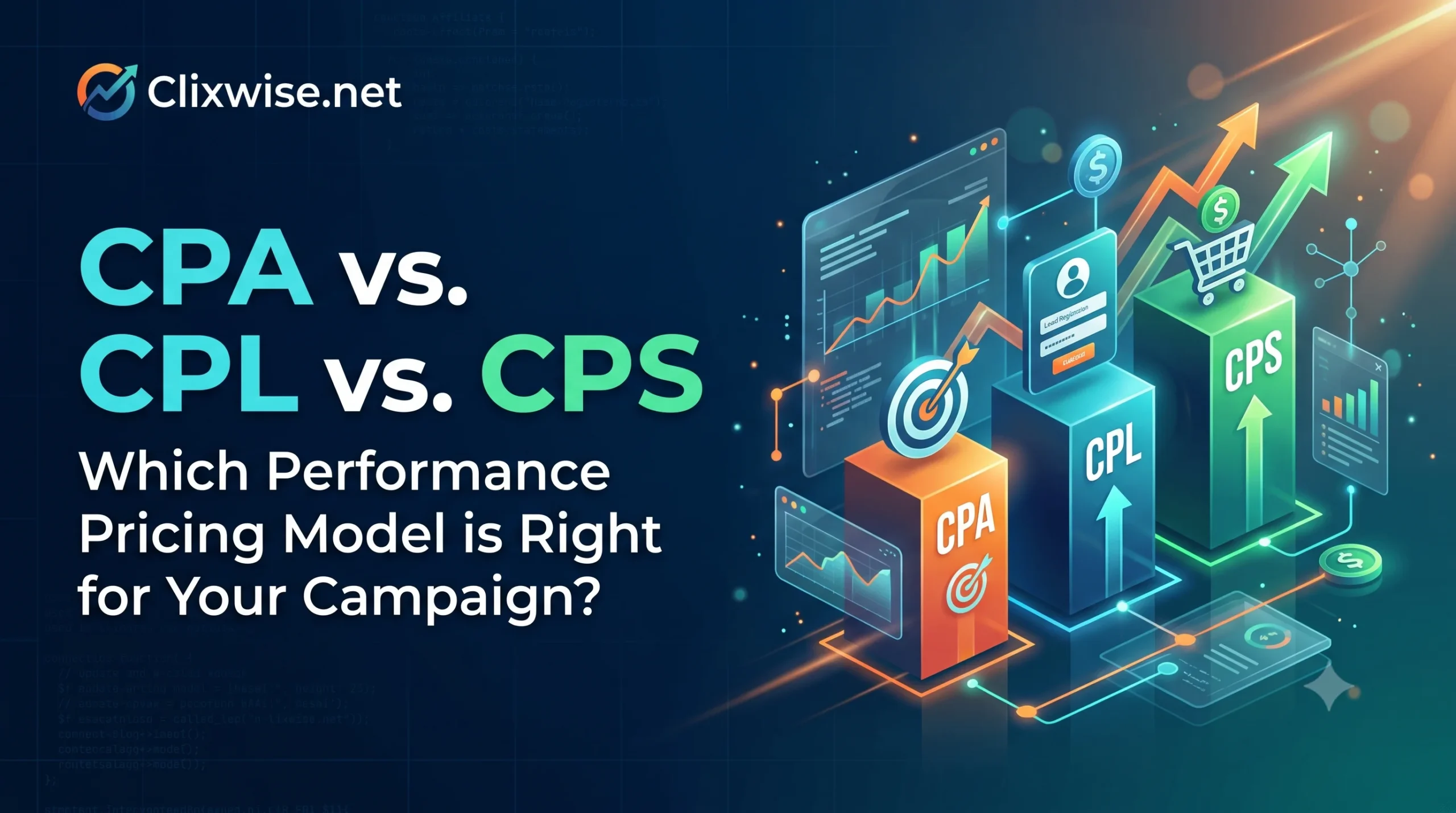
CPA vs. CPL vs. CPS: A Direct Comparison
Choosing the right path requires understanding how these models differ in risk, effort, and technical setup.
- Risk Distribution: In a CPA model, the risk is shared between the advertiser and the publisher. CPL carries a moderate level of risk for the advertiser. CPS ensures the advertiser carries minimal risk.
- Funnel Complexity: CPA typically utilizes simple funnels to drive quick conversions. CPL requires medium complexity funnels to capture and validate data. CPS demands advanced, multi-step funnels to build trust and process transactions.
- Payment Timelines: CPA models offer fast payouts for affiliates. CPL involves medium approval cycles to verify lead authenticity. CPS requires longer validation and holding periods to account for refunds or chargebacks.
Strategic Alignment and Best Practices
There is no single best model; the right choice depends entirely on your business goals. If your primary objective is brand awareness and growth, CPA is an excellent choice. If you need to focus on pipeline building, CPL is the most effective route. For revenue-focused scaling and direct profitability, CPS is the optimal model.
It is also critical to match your chosen payout model to your specific traffic type. Buying-intent traffic converts best with CPS offers, while broad informational traffic is much better monetized with CPL offers. Misaligning your pricing model to your traffic type is the most costly mistake new affiliates make.
Ultimately, many successful brands and affiliates utilize a hybrid approach by combining multiple models across the customer journey. For instance, a brand might use a CPL campaign to build an extensive email list and then utilize CPS-targeted advertisements to convert those leads into paying customers. Regardless of the model you select, partnering with a trusted performance network like Clixwise ensures you have access to the reliable tracking, transparent reporting, and high-converting offers necessary to scale your media buying effectively.